

Sending cryptocurrency to the wrong wallet address can result in the permanent loss of your digital assets. Unlike traditional bank transfers, most cryptocurrency transactions cannot be reversed by contacting a central authority or requesting a payment cancellation. Once a transaction is confirmed on the blockchain, the funds are generally transferred to the destination address and remain under the control of whoever has access to that wallet.
However, losing cryptocurrency after entering incorrect transaction details does not always mean recovery is impossible. Your options depend on where the funds were sent, whether the transaction is confirmed, which blockchain network was used and whether the receiving wallet belongs to an exchange or someone you can contact.
For example, sending Bitcoin to an unknown person’s wallet is very different from transferring USDT to your own wallet using an unsupported network. The second situation may have a possible recovery route, depending on wallet compatibility.
This article explains what happens when cryptocurrency is sent to the wrong address, whether the transaction can be reversed, how to attempt recovery and how to prevent similar mistakes.
What Happens When You Send Cryptocurrency to the Wrong Wallet Address?
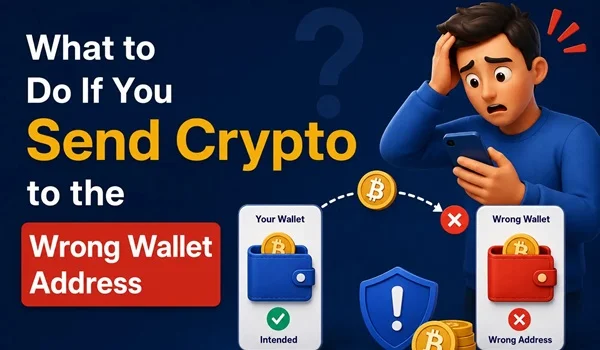
Every cryptocurrency wallet has an address used to receive digital assets. When you send cryptocurrency, the transaction is broadcast to the relevant blockchain network for processing.
If you enter an incorrect but valid wallet address, the network may process the transaction and transfer the funds to that address.
For example:
Suppose you want to send 0.5 ETH to your friend’s Ethereum wallet. However, you accidentally paste another person’s Ethereum address and confirm the transaction.
If the transaction is successfully confirmed, the 0.5 ETH will be transferred to the unintended address. Your wallet provider generally cannot simply reverse the payment.
The consequences depend on the situation:
- Unknown wallet address: The funds may become permanently inaccessible to you.
- Address belonging to another person: You may need the recipient’s cooperation to recover the funds.
- Your own incorrect wallet address: Recovery may be possible if you control the private keys and use a compatible wallet.
- Exchange deposit address: The exchange may investigate and offer recovery in eligible cases.
- Wrong blockchain network: Recovery may be possible if the receiving platform controls the address and supports a recovery process.
- Invalid address: The wallet or network may reject the transaction before it is completed.
Bitcoin.org and Ethereum.org both explain that confirmed transactions cannot ordinarily be reversed by the network. A refund generally requires cooperation from the recipient.
Can a Cryptocurrency Transaction Be Reversed After Sending It?
In most cases, no. Cryptocurrency transactions are designed to be processed without relying on a central payment authority that can cancel completed transfers.
Once a transaction is confirmed, neither the sender nor an ordinary wallet provider can independently reverse it.
However, the position depends on the transaction status.
| Transaction status | What may happen |
| Not submitted | You can correct the address before sending |
| Pending | Some networks and wallet configurations may support cancellation or replacement |
| Confirmed | The transaction generally cannot be reversed |
| Failed | The transfer may not have completed; check the wallet balance and transaction details |
| Sent to an incorrect exchange deposit address | Contact the receiving exchange immediately to check recovery options |
A pending transaction should not be assumed to be cancellable. Some blockchain networks offer transaction-replacement mechanisms under specific conditions, but availability depends on the network, wallet and transaction configuration.
For example, Bitcoin supports Replace-by-Fee (RBF) in certain circumstances. This does not mean that every pending Bitcoin transaction can be cancelled.
Once a transaction has been confirmed, attempting to contact customer support cannot force the blockchain to reverse it.
Different Situations When Cryptocurrency Is Sent to the Wrong Address
Not all incorrect crypto transfers have the same consequences. Understanding the type of mistake is important before attempting recovery.
1. Cryptocurrency Sent to a Completely Unknown Wallet
This is one of the most difficult situations.
Suppose you accidentally send 2,000 USDT to an address that belongs to an unknown person. If the transaction is confirmed, the funds are controlled by the receiving address’s private key holder.
Blockchain transactions are publicly recorded on many networks, but wallet addresses do not automatically reveal the identity of their owners.
You can examine the transaction using a blockchain explorer, but identifying the recipient may not be possible.
If the owner cannot be identified or contacted, recovery is generally unlikely.
2. Cryptocurrency Sent to Your Own Wrong Wallet Address
Sometimes people accidentally select an old wallet address or use an address belonging to another wallet they control.
In this situation, recovery may be possible if you have the corresponding private key or recovery phrase and the wallet supports the cryptocurrency and network involved.
For example, you may have multiple Ethereum-compatible wallets and accidentally send a token to an address associated with another wallet that you own.
If you control the destination wallet, you may be able to access the funds through a compatible wallet application.
However, do not import your recovery phrase into an unfamiliar website or share it with anyone claiming to recover your cryptocurrency.
3. Cryptocurrency Sent to an Exchange’s Incorrect Deposit Address
If you send cryptocurrency to an exchange address that belongs to the platform but use the wrong asset, network or deposit details, the exchange may be able to investigate.
For example, you send a token to a deposit address provided by an exchange, but the platform does not support that token on the selected network.
Some exchanges offer asset-recovery procedures for eligible transactions. However, recovery is not guaranteed and may involve technical restrictions, processing time or fees.
Contact the exchange’s official support team as soon as possible.
4. Cryptocurrency Sent to the Wrong Blockchain Network
This is a common mistake, particularly when transferring tokens such as USDT or USDC across different networks.
For example, you intend to send USDT through the TRON network but accidentally select the Ethereum network.
Whether recovery is possible depends on the destination address, the receiving wallet’s capabilities and whether the recipient controls the relevant address on that network.
In some cases, the address may be compatible across multiple networks, allowing the owner to access the asset using an appropriate wallet. In other cases, the receiving platform may need to perform a technical recovery.
Never assume that using the same-looking address means every network is interchangeable.
5. Cryptocurrency Sent Without a Required Memo or Destination Tag
Some cryptocurrencies and exchange deposit systems require an additional destination tag, memo or payment identifier.
For example, certain XRP and Stellar deposits use a shared receiving address, with a separate tag or memo identifying the customer’s account.
If you enter the correct wallet address but forget the required destination tag, the funds may reach the exchange’s wallet without being credited to your account.
Contact the exchange with your transaction details. The platform may be able to identify and recover the deposit, depending on its procedures.
How to Recover Cryptocurrency Sent to the Wrong Wallet Address
If you have made an incorrect transfer, take action quickly. Although a confirmed transaction cannot normally be reversed, some recovery options may be available.
Step 1: Find Your Transaction ID or Hash
Open the wallet or exchange from which you sent the cryptocurrency.
Locate the transaction and collect:
- Transaction ID or transaction hash (TXID).
- Cryptocurrency name and amount.
- Sending wallet address.
- Receiving wallet address.
- Blockchain network.
- Transaction date and time.
- Current transaction status.
The transaction hash is particularly important because it allows you to locate the transfer on a blockchain explorer.
Step 2: Check the Transaction on a Blockchain Explorer
A blockchain explorer allows you to inspect publicly available transaction information.
Examples include:
| Blockchain | Explorer |
| Bitcoin | Blockchain.com Explorer |
| Ethereum | Etherscan |
| BNB Smart Chain | BscScan |
| Polygon | PolygonScan |
| TRON | Tronscan |
Paste your transaction hash into the relevant explorer.
Check whether the transaction is pending, confirmed or failed. Verify the sending address, receiving address, token and amount.
A blockchain explorer helps you investigate the transaction. It cannot reverse the transfer or identify the private key holder simply from the wallet address.
Step 3: Contact the Receiving Wallet Owner
If you know the person or organisation that controls the destination address, contact them directly.
Explain the mistake and provide the transaction hash as evidence.
For example, if you accidentally sent cryptocurrency to a business partner’s wallet instead of your own, you can request that they return the funds to your correct address.
Remember that the recipient must cooperate with the refund. Do not assume that a successful transaction automatically creates a refund.
Step 4: Contact the Cryptocurrency Exchange
If the receiving address belongs to a cryptocurrency exchange, submit a support request through its official website or application.
Provide:
- Transaction hash.
- Cryptocurrency and amount.
- Sending and receiving addresses.
- Network used.
- Deposit or withdrawal reference, if available.
- Screenshots of the transaction.
Ask whether the transaction qualifies for asset recovery.
Some exchanges have specific recovery procedures for unsupported tokens, missing destination tags or incorrect networks.
For example, Coinbase provides an asset-recovery process for certain eligible unsupported crypto deposits. WazirX also describes limited recovery scenarios for certain incorrect deposits. These processes do not mean that every wrong-address withdrawal can be recovered.
Step 5: Secure Your Wallet and Monitor the Situation
If the transfer occurred because of a suspicious link, fake wallet application or unauthorised access, treat the incident as a potential security breach.
Consider these precautions:
- Check whether any unauthorised transactions occurred.
- Revoke suspicious token approvals where applicable.
- Move remaining assets to a secure wallet if your private key may be compromised.
- Never disclose your seed phrase or private keys.
- Preserve transaction records and communications.
If you suspect fraud rather than an ordinary typing mistake, report the incident to the relevant platform and appropriate authorities.
Can You Get Your Cryptocurrency Back If the Recipient Refuses to Return It?
If you send cryptocurrency to another person’s wallet by mistake and the recipient refuses to return it, recovery becomes difficult.
The blockchain itself does not provide a conventional dispute-resolution mechanism for mistaken payments.
However, the legal position may depend on the facts and jurisdiction.
If the recipient is identifiable and deliberately retains funds received by mistake, you may consider seeking legal advice about available civil remedies. If the transfer resulted from cheating, impersonation or another criminal act, a complaint to the appropriate law-enforcement authority may also be relevant.
In India, if the transaction involved cyber fraud, you can report it through the National Cyber Crime Reporting Portal at cybercrime.gov.in or call 1930 for financial cyber-fraud assistance.
However, a simple accidental transfer is not automatically a criminal offence by the recipient. The facts, recipient’s conduct and applicable law matter.
What Is the Difference Between a Wrong Wallet Address and a Wrong Network?
These two mistakes are often confused, but they can have different recovery possibilities.
| Factor | Wrong wallet address | Wrong blockchain network |
| Meaning | Funds are sent to an unintended destination address | Funds are sent through a network not supported by the recipient |
| Transaction result | May be successfully confirmed | May be confirmed but not credited |
| Recovery possibility | Usually difficult if the owner is unknown | May be possible in certain compatible-wallet or exchange situations |
| Who can help? | Destination wallet owner or receiving platform | Receiving exchange or compatible wallet provider |
| Guarantee of recovery | No | No |
For example, sending ETH to a completely unrelated Ethereum address is different from sending a supported token to an address you own through another compatible network.
Always identify whether the mistake concerns the address itself, the network, the token or a missing destination tag before contacting support.
Can a Crypto Exchange Recover Funds Sent to the Wrong Address?
A cryptocurrency exchange may help in certain situations, but it does not have universal control over blockchain transactions.
Recovery may be possible when:
- The receiving address belongs to the exchange.
- The exchange controls the relevant private keys.
- The token and network are technically supported for recovery.
- The transaction can be identified and verified.
- The exchange’s recovery policy permits assistance.
Recovery may not be possible when:
- Funds were sent to an unknown external wallet.
- The destination address is not controlled by the exchange.
- The asset or network is technically unsupported.
- The private keys are unavailable.
- The funds were sent to an incompatible smart contract without a recovery function.
Some platforms may charge a recovery fee or require additional verification. Always confirm the procedure through the platform’s official support channel before agreeing to any payment.
How to Prevent Sending Cryptocurrency to the Wrong Wallet Address
Preventing an incorrect transfer is much easier than attempting to recover lost cryptocurrency.
Follow these safety practices whenever you send digital assets.
- Copy and verify the wallet address
Use the wallet’s official copy function instead of typing the address manually. Check the complete destination address before confirming.
- Verify the blockchain network
Confirm that the sending and receiving wallets support the same network for the particular asset.
- Send a small test transaction
For a large transfer, consider sending a small amount first. Confirm that it reaches the intended wallet before transferring the remaining funds.
Remember that test transactions also involve network fees and do not eliminate every risk.
- Check the destination tag or memo
For assets and exchanges that require an additional identifier, verify that the correct tag or memo is included.
- Beware of address-poisoning scams
Scammers may send small transactions from addresses that resemble ones you have previously used. They hope you will copy a fraudulent address from your transaction history.
Always compare the complete destination address with the intended recipient’s verified address.
- Avoid sending funds under pressure
Do not rush a transaction because someone claims that an offer, investment opportunity or payment request will expire immediately.
- Use trusted wallet applications
Download wallet software from official websites or verified application stores. Fake wallet applications can steal recovery phrases and private keys.
Common Mistakes to Avoid After Sending Crypto to the Wrong Address
After losing access to cryptocurrency, people sometimes make additional mistakes while attempting recovery.
Avoid the following:
- Paying an unknown person who guarantees recovery.
- Sharing your seed phrase or private key with supposed support agents.
- Connecting your wallet to suspicious recovery websites.
- Repeatedly sending small amounts to the incorrect address.
- Assuming a blockchain explorer can reverse transactions.
- Trusting unsolicited direct messages claiming to represent an exchange.
- Paying a recovery fee without verifying the service through official channels.
Important: A genuine wallet provider or exchange support agent should not need your seed phrase or private key to investigate a transaction. Anyone requesting these credentials should be treated as suspicious.
Frequently Asked Questions (FAQs)
What happens if I send Bitcoin to the wrong wallet address?
If the transaction is confirmed, Bitcoin is transferred to the destination address. You generally cannot reverse it. Recovery usually requires cooperation from the recipient or access to the wallet that received the Bitcoin.
Can I cancel a cryptocurrency transaction after sending it?
A transaction that has not yet been confirmed may have limited cancellation or replacement options on certain networks. Once confirmed, it generally cannot be cancelled or reversed.
Can cryptocurrency sent to an invalid wallet address be recovered?
Many wallets validate address formats before broadcasting a transaction, so an invalid address may be rejected. However, a valid address that belongs to someone else can still receive the funds. The outcome depends on the specific network and transaction status.
What happens if I send USDT to the wrong network?
The funds may not appear in the destination account. Recovery may be possible if the receiving address is controlled by you or the exchange and the relevant network and token can be accessed. Contact the receiving platform immediately.
Can a crypto exchange reverse a mistaken withdrawal?
Generally, an exchange cannot reverse a confirmed blockchain withdrawal sent to an external address. It may investigate certain cases involving its own wallets or eligible recovery scenarios, but success is not guaranteed.
Can I recover cryptocurrency sent to a scammer’s wallet?
Recovery is difficult because confirmed transactions cannot ordinarily be reversed. Report the incident to the exchange, preserve the transaction hash and contact the appropriate cybercrime authorities if fraud is involved.
Does a blockchain explorer show who owns a wallet address?
A blockchain explorer generally shows public transaction information, including wallet addresses and transaction history. It does not automatically reveal the real-world identity of the wallet owner.
Is a small test transaction necessary before every crypto transfer?
It is not compulsory, but it is a useful precaution when transferring a significant amount to a new address or network. It can help identify address or network mistakes before a larger transfer is made.
Conclusion
Sending cryptocurrency to the wrong wallet address can lead to permanent financial loss because confirmed blockchain transactions are generally irreversible. Unlike traditional bank transfers, there is usually no central authority that can cancel a completed crypto payment.
However, recovery may still be possible in certain situations, particularly when the destination address belongs to an exchange, when you control the receiving wallet or when the problem involves a recoverable network or deposit error.
If you make a mistake, immediately collect your transaction hash, verify the transfer through a blockchain explorer and contact the receiving wallet provider or exchange through its official support channel.
The safest approach is prevention. Always verify the wallet address, cryptocurrency, blockchain network and destination tag before confirming a transaction. A few moments of checking can prevent the loss of valuable digital assets.
Disclaimer: This article is for educational purposes and does not constitute financial, investment or legal advice. Cryptocurrency transactions involve substantial risks, and recovery of mistakenly transferred funds is never guaranteed.